If you look in your child’s mouth one day and suddenly notice a second row of teeth, it can be a little alarming. Many parents describe this stage as “shark teeth” because it looks like new teeth are coming in behind the baby teeth instead of replacing them. The good news is that this is a fairly common part of childhood dental development, and in many cases it can be managed without panic. At Kids Smiles Pediatric Dentistry, we help families in St. Louis understand what is normal, what is not, and when it makes sense to have your child evaluated.
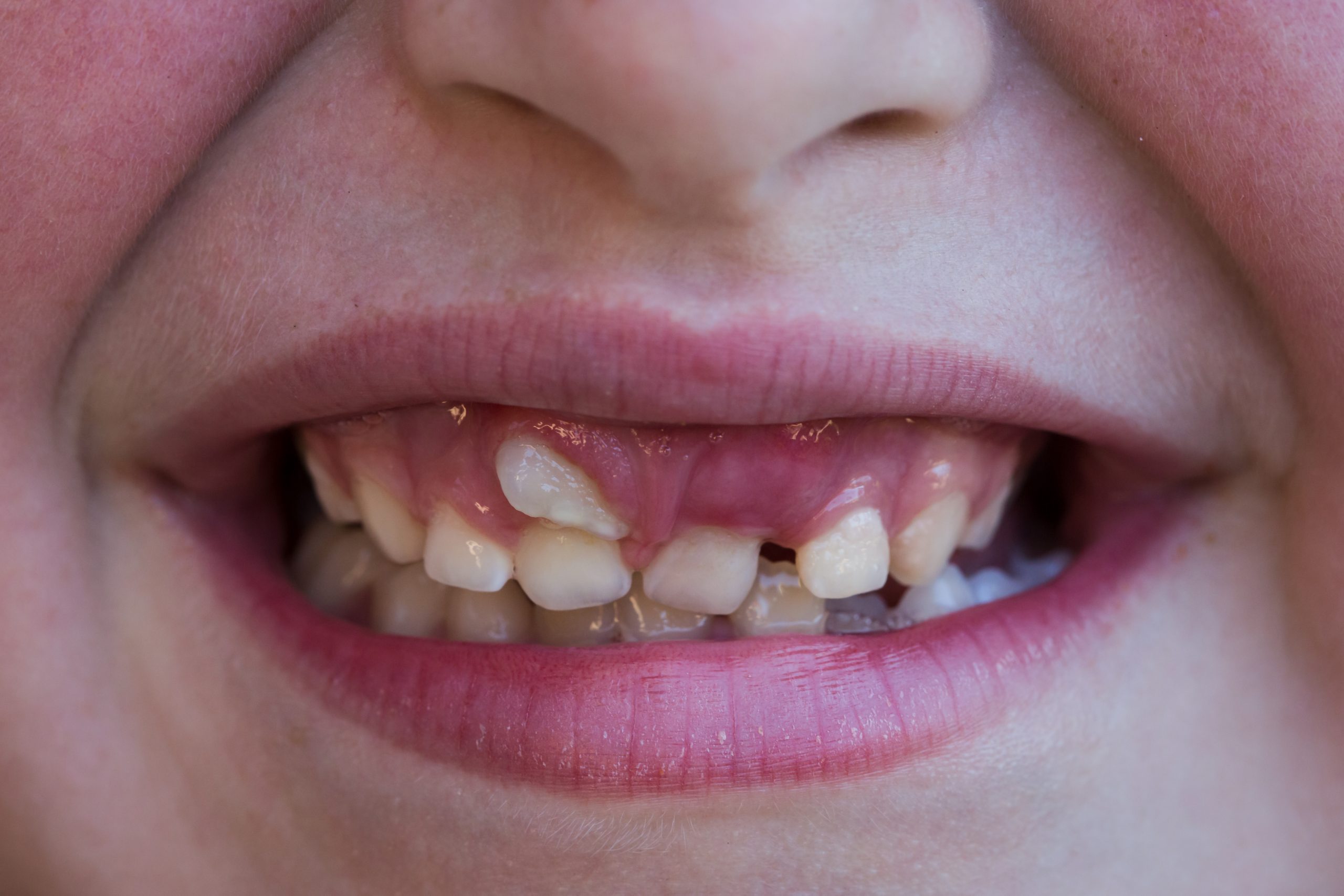
“Shark teeth” is the nickname for a situation where a permanent tooth starts erupting before the baby tooth in front of it has fallen out. Instead of the permanent tooth taking its place right away, your child may temporarily have two rows of teeth. This often happens during the mixed dentition stage, which is the period when children have both baby teeth and permanent teeth in the mouth at the same time. Kids Smiles specifically offers care for this stage of development because eruption patterns, spacing, and early alignment matter more than many parents realize.
What causes shark teeth in kids?
Normally, as permanent teeth begin moving into place, they dissolve the roots of the baby teeth. Once enough of the root is gone, the baby tooth becomes loose and falls out. Sometimes that process does not happen quite on schedule. A permanent tooth may start coming in before the baby tooth is ready to leave, which creates that double-row appearance parents notice. According to HealthyChildren.org, children usually begin losing baby teeth around age 6, starting with the front teeth, and the roots of those baby teeth are naturally reabsorbed as permanent teeth erupt.
Shark teeth are most commonly seen around the lower front teeth, although they can happen in other areas too. In some children, it is simply a timing issue. In others, crowding, the angle of eruption, or limited space in the jaw can contribute to teeth coming in out of position. This is one reason pediatric dentists monitor mixed dentition closely. At Kids Smiles, services like mixed dentition monitoring and interceptive orthodontics are designed to catch these concerns early and guide healthy development as the permanent smile starts coming in.
Are shark teeth normal?
In many cases, yes. Shark teeth are often more surprising than serious. A lot of children go through a short period where the permanent tooth is visible behind the baby tooth, then the baby tooth loosens and falls out on its own. Once that happens, the tongue and normal chewing forces often help the new tooth move forward over time.
That said, “common” does not always mean “ignore it.” If the baby tooth is not loosening, if your child seems uncomfortable, or if the tooth eruption looks significantly crowded, it is smart to have it checked. Early evaluation can help determine whether the situation is likely to resolve naturally or whether your child may need help from a pediatric dentist. The American Academy of Pediatric Dentistry emphasizes that early diagnosis and treatment of developing bite and eruption problems can support a more stable and functional result as children grow.
What should parents do at home?
The first step is not to panic. If your child has shark teeth, take a close look at the baby tooth in front. Is it wiggly? If so, encouraging gentle wiggling may help it come out naturally. Sometimes children avoid touching a loose tooth because it feels strange, but a little movement each day can help the process along. Good brushing is also important during this stage because crowded teeth can trap more plaque and food.
You should avoid trying to force the tooth out yourself if it is not ready. Pulling too early can be uncomfortable and may not solve the problem if the permanent tooth is still erupting at an odd angle. Instead, keep an eye on the area and schedule an exam if the baby tooth stays firm or the double row does not improve. A pediatric dentist can determine whether monitoring is enough or whether removal of the baby tooth would help the permanent tooth come in more normally.
When should you call a pediatric dentist?
It is a good idea to schedule a visit if the baby tooth is not loose at all, if the permanent tooth has come in quite a bit already, or if your child is having pain, swelling, or trouble biting comfortably. You should also have the area checked if shark teeth are happening in multiple places, if your child already has crowding, or if you have concerns about how the bite is developing. These are exactly the types of issues a pediatric dentist watches for during the mixed dentition years.
An exam can also be especially helpful if your child has had past spacing issues, a history of early tooth loss, or previous orthodontic concerns. Baby teeth play an important role in guiding permanent teeth into place. HealthyChildren.org notes that baby teeth help hold space for the permanent teeth, and losing them too early or having eruption patterns change unexpectedly can affect how adult teeth come in later.
Will shark teeth mean my child needs braces?
Not necessarily. Shark teeth do not automatically mean your child will need braces or other orthodontic treatment later. Sometimes it is just a temporary stage in normal eruption. However, shark teeth can occasionally be one sign that there is not enough room for the permanent teeth to come in ideally. That is where early monitoring matters. Kids Smiles offers interceptive orthodontics to help address developing issues such as overcrowding, crooked teeth, or teeth that are not emerging in the right sequence.
Interceptive orthodontics is not the same thing as full braces for every child. In many cases, it simply means identifying a problem early and deciding on the most conservative next step. That may involve monitoring, timing the loss of baby teeth, or recommending treatment only if it is truly beneficial. Parents often feel better once they know whether their child’s situation is just a phase or part of a larger alignment issue.
Why early evaluation matters
One of the biggest advantages of pediatric dentistry is that it focuses on growth and development, not just cavities. Children’s mouths change quickly, and what looks minor to a parent can tell a specialist a lot about how the smile is developing. At Kids Smiles Pediatric Dentistry, the team cares for infants, toddlers, children, teens, and children with special needs in a setting designed to feel safe, fun, and positive. That child-centered approach matters when kids are dealing with unfamiliar changes like loose teeth, erupting teeth, and bite development.
The practice also emphasizes minimally invasive care and modern technology, which is reassuring for parents who want answers without feeling rushed into treatment. In many shark teeth cases, the right next step may simply be observation and reassurance. In others, a timely pediatric dental visit can help prevent a more frustrating alignment issue down the road.
The bottom line on shark teeth
Seeing permanent teeth come in behind baby teeth can look strange, but it is not always an emergency. Shark teeth in kids are often part of normal mixed dentition, especially around the age when children begin losing baby teeth. Still, parents should not feel like they have to guess whether things are progressing normally. If the baby tooth is not loosening, the tooth position looks crowded, or you just want peace of mind, a pediatric dental evaluation is a smart next step.
At Kids Smiles Pediatric Dentistry, Dr. Kelly Jobe, Dr. Jane Witt, and their team help St. Louis families navigate every stage of childhood dental development, from first visits to mixed dentition and early orthodontic concerns. If your child has shark teeth or another eruption issue, contact Kids Smiles Pediatric Dentistry to schedule a consultation.