Fillings For Kids
Dr. Kelly Jobe | Pediatric Dentist | St. Louis, MO
Fillings for kids
If your child has cavities, you’re not alone! Nearly 4 million preschoolers have some form of tooth decay – It’s the most common infectious disease in children; more common than asthma.
Not many people realize that cavities are a bacterial infection, and can spread if it’s not stopped in its tracks. When this bacteria gets exposed to sugar, it creates acid which causes cavities.
That means sugar is like fuel for cavity-causing bacteria. Since sugar is the food of choice for many children, it’s no wonder they are more likely to get cavities than adults!
When cavities are small and shallow, sometimes they can simply be remineralized with fluoride treatments. Unfortunately most cavities aren’t this shallow, so deeper cavities in baby teeth and permanent teeth are generally treated with a filling. They are the primary way to fix small to moderate size cavities, and prevent tooth decay from spreading.
If a child’s tooth is severely decayed, dentists might recommend a crown or even removal instead of a filling.
Do children’s cavities need to be filled?
As a parent, you might be wondering if fillings are a waste of time. Baby teeth are going to fall out anyway, right?
But there is more to consider. No matter your child’s age, getting cavities filled quickly is vital for their oral health. The only exception is if the tooth is projected to fall out within 4 to 6 months.
Not only does filling a cavity save a decaying tooth, it also stops tooth decay from spreading and helps permanent teeth form correctly in the future. This is because baby teeth serve as a guide for permanent teeth to erupt in their correct place. When baby teeth fall out prematurely from decay, your child’s permanent teeth can become misaligned.
It’s also important to remember that baby teeth still help a child chew, as well as speak correctly.
Children as young as 1 or 2 years old get fillings. So it’s never too early to get a filling if decay is present!
What happens in a dental filling procedure for children?
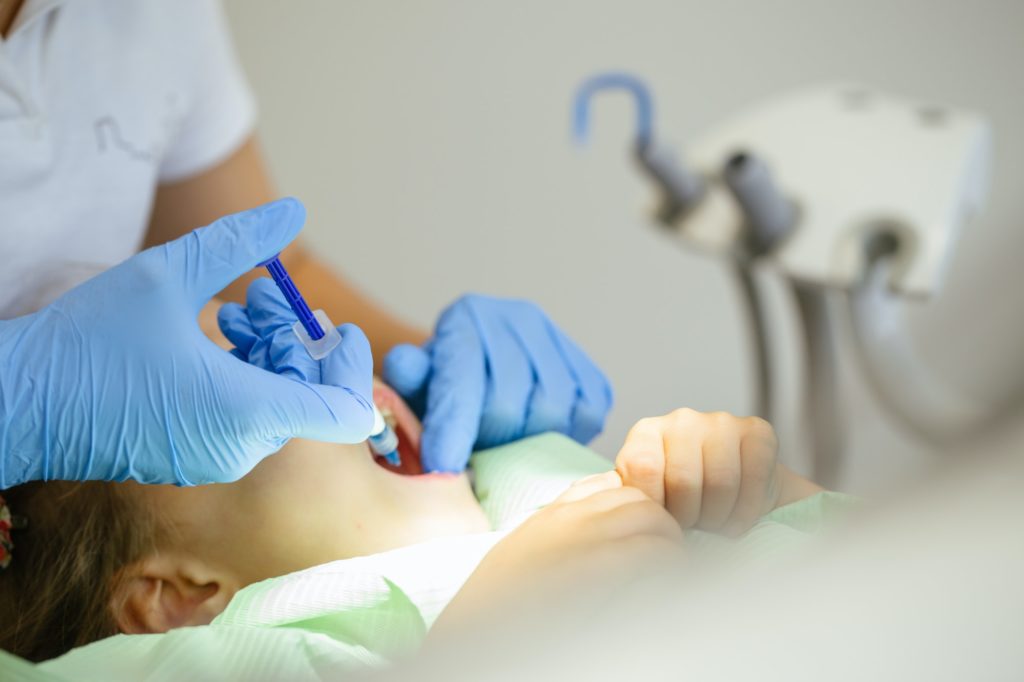
Dental fillings for kids start with making your child comfortable. We pick out a show or movie to watch, next we will explain and show them what to expect during the procedure. We are great at using language they can understand. If nitrous oxide (laughing gas) is being used, we will then get that started. If additional anesthesia is required, we will administer that as well. We let them know we will ‘splash sleepy juice’. A majority of kids aren’t even aware they got a poke!
Then, the dentist removes the cavity and fills the hole with a tooth-colored composite material. We shine a light to harden the material, make sure it’s smooth for eating and everything is complete – except for prizes and stickers that is! Modern dental fillings are easy to place, incredibly durable and inexpensive.
And don’t worry – Our dentist and staff are experienced in gently guiding your child through the process, calming any frazzled nerves!
How do I prepare my child for a filling?
More than 60 percent of adults are afraid of the dentist. We don’t know what percentage of children are afraid of the dentist, but we wouldn’t be surprised if it was even higher!
But think about it. Would you be less anxious if you knew exactly what to expect, and knew you’d be treated with gentleness and care?
It’s the same with kids! The more prepared they are, the better they’ll feel about your appointment (and the less they’ll fear dentists later in life).
You may prepare your child for the appointment as much as you feel comfortable. We will fill in any gaps before getting started. Draw on your own positive experiences with the dentist or getting a filling. It probably wasn’t as bad as you thought it would be, right? Telling your child that you were nervous too but it was easier than you thought, is a great way to build their confidence. Seeing you be brave inspires them to do the same. Either way, we are here to guide everyone through a successful, confidence-building appointment.
Pro tip: Bring your child’s favorite stuffed animal or toy to the appointment. This can help them feel a little less anxious during the procedure.
Also keep in mind that your child will need time to recover after the filling, so build plenty of time into the rest of your day to help them rest properly. Lots of hydration and hugs makes everything better.
Questions for Dr. Jobe or the Kids Smiles Pediatric Dentistry team?
Dr. Kelly Jobe and the team at Kids Smiles Pediatric Dentistry are committed to providing the best pediatric dental care in the greater St. Louis, MO area! Please contact us with any questions regarding your kid’s dental health, we are here to help!
FAQs
A dental filling is a common procedure used to treat cavities by removing the decayed portion of a tooth and filling the space with a durable material to restore its function and shape. Cavities are actually a bacterial infection, and one of the most common childhood health conditions, more prevalent in children than even asthma. At Kids Smiles Pediatric Dentistry in St. Louis, Dr. Kelly Jobe uses tooth-colored composite fillings to treat small to moderate cavities and stop decay from spreading to surrounding teeth.
This is one of the most common questions parents ask, and the answer is almost always yes. Baby teeth play an important role in helping children chew and speak correctly, and they also serve as guides for permanent teeth to grow in properly. When decay is left untreated, it can spread to neighboring teeth and cause baby teeth to fall out too early, which can lead to misalignment of the permanent teeth coming in behind them. The only exception is if the tooth is expected to fall out naturally within the next four to six months.
Children as young as one or two years old can receive fillings if decay is present. There is no minimum age requirement when it comes to treating a cavity. The earlier a cavity is caught and treated, the better the outcome for your child’s overall oral health. At Kids Smiles Pediatric Dentistry, our team is experienced in making very young patients feel comfortable and supported throughout the entire process.
The appointment starts with getting your child comfortable. Our team picks out a show or movie for them to watch and walks them through each step using child-friendly language so there are no surprises. If nitrous oxide is being used, that is started first. If additional anesthesia is needed, it is administered in a way that is gentle and minimally stressful. Most kids barely notice. Once the area is numb, Dr. Jobe removes the decayed material and fills the tooth with a tooth-colored composite resin. A curing light hardens the material, the filling is smoothed, and the appointment wraps up with prizes and stickers.
Yes. Tooth-colored composite fillings are a safe, durable, and widely used option for treating cavities in children. They bond directly to the tooth structure, which means less healthy tooth material needs to be removed compared to older filling types. They also blend in naturally with the surrounding tooth, making them a popular choice for both front and back teeth. Dr. Jobe uses composite fillings at our St. Louis office because of their strength, appearance, and track record of safety.
The best thing you can do is keep the conversation calm and positive. Share your own experiences with dental visits in a reassuring way. Letting your child know that you were nervous too but it turned out to be easier than expected helps build their confidence. You can also bring a favorite stuffed animal or toy to the appointment for comfort. Our team at Kids Smiles Pediatric Dentistry will fill in any gaps before getting started and will guide your child through every step at their own pace.
After a filling, the affected area may feel numb for a few hours due to the local anesthetic. During that time, your child should avoid chewing on the numb side to prevent accidentally biting their cheek or tongue. Once the numbness wears off, most children can resume normal eating. It is a good idea to keep the rest of the day low-key and make sure your child stays hydrated. If your child experiences sensitivity or discomfort after the numbness fades, contact our St. Louis office and we will help determine next steps.
The best prevention comes down to consistent habits at home combined with regular professional care. Brush your child’s teeth twice a day with a fluoride toothpaste, floss daily, and limit sugary snacks and drinks, especially between meals. Fluoride treatments and dental sealants are also effective tools for protecting teeth from decay. The American Academy of Pediatric Dentistry recommends checkups every six months. If you are looking for a trusted pediatric dental office for fillings in St. Louis, call Kids Smiles Pediatric Dentistry at (314) 270-5817 or visit us at 9735 Landmark Parkway Dr., Suite 16, St. Louis, MO 63127.
Have more questions about your child’s dental health? Contact St. Louis, MO’s award-winning Pediatric Dentist, Dr. Kelly Jobe!
What Our Patients Say
Dr. Kelly Jobe & her staff are passionate about providing the best pediatric dental care in St. Louis, MO!

 Jake SpiesSeptember 12, 2026
 Very kid friendly. Went to accent dental in Brentwood and was not a good experience. Tried this place and my kids loved it.
 Aurelia HernandezSeptember 8, 2026A very wonderful place. The staff was very nice and helpful
 Cynthia RobisonSeptember 4, 2026Kids Smiles is amazing and they do great with my son! He always looks forward to going to the dentist! They’re always so kind and sweet! 100% highly recommend!
 Katherine HendersonSeptember 3, 2026This place is so kid friendly! The Drs and staff are very kind! We have been coming up here for around 2 years now and my kids are always excited to go to the dentist! Even if they have to get work done its never a fight!
 Shantay BlairSeptember 3, 2026This is the best dentist for kids, everyone is so nice and my son always comes out smiling 😊Google rating score: 4.9 of 5, based on 897 reviews
Stay connected with Kids Smiles
Stay connected with Kids Smiles
Quick Links
Contact Info
-
Kids Smiles Pediatric Dentistry
9735 Landmark Parkway Dr.
Suite #16 St. Louis, MO 63127 - (314) 270-5817
- info@kidssmilesdentist.com
© Copyright Kids Smiles Pediatric Dentistry. All rights reserved. Privacy Policy.